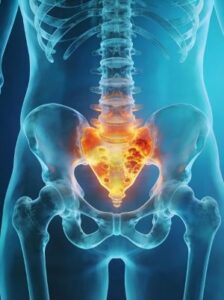
If you’ve ever experienced stubborn low back or tailbone pain, the source may be an often overlooked but key bone at the base of the spine: the sacrum. Although it’s rarely talked about outside medical circles, the sacrum plays a crucial role in posture, stability and movement. In fact, it can be considered the fulcrum of the body.
When the sacrum becomes irritated or misaligned, it can cause significant discomfort — but treatments like acupuncture offer significant relief.
What Is the Sacrum?
The sacrum is a triangular bone located below the last lumbar vertebrae, just above the tailbone (coccyx). It sits between the two pelvic bones and forms the posterior wall of the pelvis.
In early life, the sacrum begins as five separate vertebrae, but these gradually fuse together during adulthood to form a single solid bone. This structure makes the sacrum strong enough to support the weight of the upper body while transferring that weight into the pelvis and legs.
The sacrum connects with other bones through important joints:
- Sacroiliac joints (SI joints): Where the sacrum meets the left and right pelvic bones
- Lumbosacral joint: Where the sacrum meets the lowest lumbar vertebra (L5)
- Sacrococcygeal joint: Where it meets the tailbone
Nerves from the spinal cord pass through openings in the sacrum, forming part of the sacral nerve plexus that helps control the legs, pelvis, bladder and bowels.
Because of its central role in load transfer and nerve passage, even small issues in the sacrum can cause widespread symptoms.
Why Causes Sacral Pain?
Sacral pain often feels like a deep ache in the lower back, tailbone, or buttocks. Sometimes the pain radiates into the hips or down the legs. Sacral pain, which can present similarly to sciatica, is often misdiagnosed in favor of other low back issues.
Common causes of sacral pain include:
- Sacroiliac Joint Dysfunction
If the SI joint becomes too stiff or too mobile, it can lead to inflammation and pain. SI joint issues are often mistaken for disc issues or other low back pain triggers.
- Muscle Imbalance and Posture
Prolonged sitting, muscle tension, poor posture, or weak gluteal muscles can put excessive stress on the sacrum and surrounding ligaments.
- Injury or Trauma
Falls onto the tailbone, sports injuries or car accidents can irritate the sacrum or surrounding tissues.
- Pregnancy and Hormonal Changes
Hormones such as relaxin loosen ligaments during pregnancy, which can increase movement in the SI joints and lead to sacral pain.
- Nerve Irritation
Because sacral nerves pass through the bone, inflammation nearby may cause symptoms such as tingling, numbness, or radiating leg pain.
How Acupuncture Can Help
Acupuncture has been used for thousands of years to treat pain, treat organ dysfunctions and restore balance in the body. Modern research suggests several ways it may help with sacral pain.
- Reducing Inflammation
Acupuncture can stimulate the body’s natural anti-inflammatory response. This may help calm irritated tissues around the sacroiliac joints and surrounding muscles.
- Releasing Muscle Tension
Tight muscles in the lower back, glutes, and hips often contribute to sacral pain. Acupuncture can significantly help to relax these muscles and improve mobility. At Heritage, we combine clinical treatment with home exercises to solidify muscle relaxation.
- Improving Blood Flow
Inserting very fine needles at specific points increases local circulation. Better blood flow supports healing in ligaments, joints and muscles around the sacrum.
- Modulating Pain Signals
Acupuncture stimulates the nervous system to release natural pain-relieving chemicals such as endorphins. It may also change how pain signals are processed in the brain and spinal cord.
A Comprehensive Approach
At Heritage, sacral pain isn’t treated in isolation. We consider the entire body — including posture, stress, digestion, sleep and lifestyle — when creating a treatment plan. To put sacral pain in the past, we show patients how to adjust pain-triggering postures, make work settings more ergonomic and incorporate functional movements and stretches.
Patients often report not only reduced pain, but also improved mobility, better sleep and more energy.
Supporting Your Sacrum
Alongside acupuncture, these habits can support sacral health:
- Gentle stretching of the hips and hamstrings
- Learning to engage glutes and core muscles
- Avoiding prolonged sitting when possible
- Maintaining good posture during daily activities
The Bottom Line
Though it’s often overlooked, the sacrum is a structural cornerstone of the body. Even though sacral issues can be painful, they’re also very treatable. Receiving an accurate diagnosis and thorough treatment can not only relieve pain, but prevent unnecessary wear and tear on the low back.